


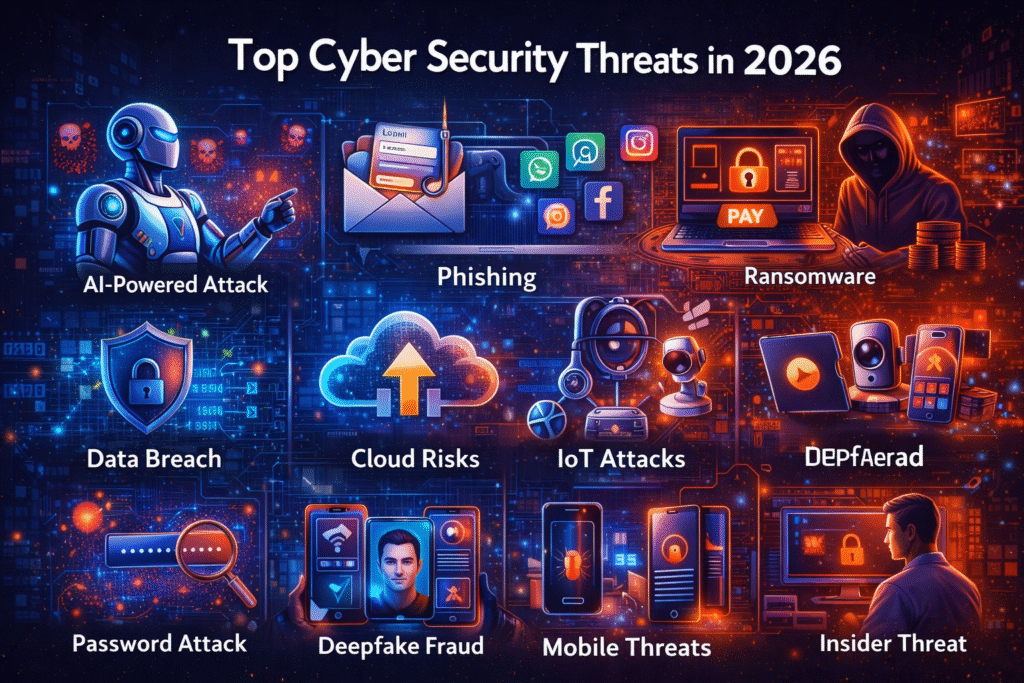
As technology continues to grow, cyber threats are also becoming more advanced. In 2026, individuals and businesses face serious risks from hackers, data breaches, and online scams.
Cybercriminals are using smarter tools and new techniques to attack systems and steal sensitive information. From phishing emails to AI-powered attacks, online threats are evolving quickly.
In this article by Tech Window, we explore the top cyber security threats in 2026 and how you can stay protected.
1. AI-Powered Cyber Attacks
Artificial Intelligence is not only used for good purposes. Hackers are also using AI to create more advanced attacks.
AI can help cybercriminals:
- Create realistic phishing emails
- Automate hacking attempts
- Identify system vulnerabilities faster
These attacks are harder to detect because they look more real and targeted.
2. Phishing and Social Engineering Attacks
Phishing remains one of the most common cyber threats. Attackers trick users into sharing sensitive information such as passwords, OTPs, and bank details.
In 2026, phishing attacks are more sophisticated. Hackers create fake websites and messages that look exactly like real ones.
They often target users through platforms like:
Users must stay alert and avoid clicking on suspicious links.
3. Ransomware Attacks
Ransomware is a type of malware that locks your files and demands payment to restore access.
Businesses are major targets of ransomware attacks. Hackers encrypt important data and ask for money in exchange for unlocking it.
In many cases, even after paying, victims may not recover their data.
Regular backups and strong security systems are essential to prevent ransomware attacks.
4. Data Breaches
Data breaches occur when hackers gain unauthorized access to sensitive information such as personal data, passwords, or financial records.
In 2026, data breaches are becoming more frequent due to:
- Weak security systems
- Poor password practices
- Lack of data encryption
Companies must invest in better security measures to protect user data.
5. Cloud Security Risks
Cloud computing is widely used by businesses. However, it also introduces new security challenges.
If cloud systems are not properly secured, hackers can access stored data.
Common cloud security risks include:
- Misconfigured settings
- Weak access controls
- Data leaks
Organizations must ensure proper security practices while using cloud services.
6. Internet of Things (IoT) Attacks
Smart devices are becoming more popular. Devices like smart TVs, security cameras, and home assistants are connected to the internet.
However, many IoT devices have weak security. Hackers can exploit these devices to gain access to networks.
IoT attacks can lead to:
- Privacy breaches
- Unauthorized access
- Network attacks
Users should secure their devices with strong passwords and regular updates.
7. Password Attacks
Weak passwords are one of the biggest security risks. Hackers use techniques like brute force attacks and credential stuffing to crack passwords.
Many users still use simple passwords like “123456” or reuse the same password across multiple accounts.
Using strong and unique passwords is essential to prevent unauthorized access.
Password managers can help manage multiple secure passwords easily.
8. Deepfake and Identity Fraud
Deepfake technology is becoming more advanced. Hackers can create fake videos or audio that look and sound real.
These can be used for:
- Fraud
- Scams
- Spreading misinformation
Identity theft is also increasing as cybercriminals use stolen data to impersonate individuals.
This makes it important to verify information before trusting it.
9. Mobile Security Threats
Mobile devices are widely used for banking, shopping, and communication. This makes them a major target for cyber attacks.
Common mobile threats include:
- Malicious apps
- Fake APK downloads
- Data theft
Users should only install apps from trusted sources and avoid unknown links.
10. Insider Threats
Not all cyber threats come from outside. Sometimes, employees or insiders misuse their access to sensitive data.
Insider threats can be intentional or accidental.
Companies must monitor access and implement strict security policies to reduce such risks.
Final Thoughts
Cyber security threats in 2026 are more advanced and dangerous than ever. Hackers are using new technologies like AI to improve their attacks.
However, individuals and businesses can stay safe by following good security practices.
Simple steps like using strong passwords, avoiding suspicious links, and keeping software updated can make a big difference.
At TechWindow, we recommend staying informed about the latest cyber threats to protect your data and digital life.


