

Top Cyber Security Threats in 2026 You Should Know
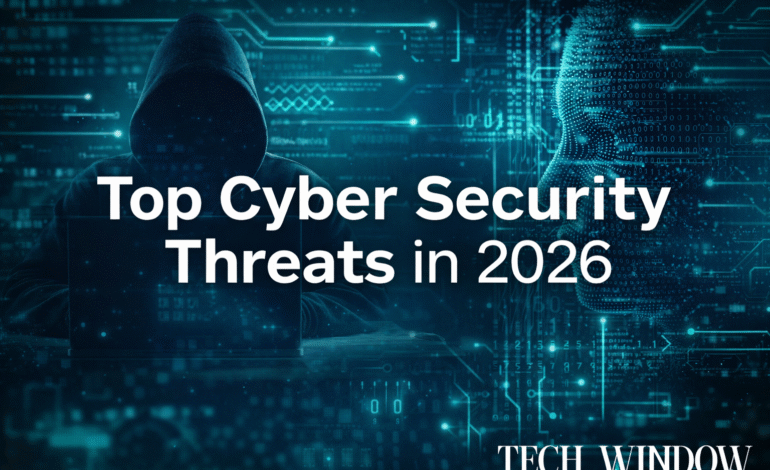

The number of cyber security threats is growing year in year out and 2026 will be more demanding than the last few years. Hackers are attacking users, companies, and online systems with advanced tools, artificial intelligence, and new techniques. Due to the fact that the majority rely on the internet to work, do their banking and to communicate, cyber security has been of great importance.
At Tech Window, we are keen on dissemination of useful and simple information to ensure that users are aware of new cyber risks in order to remain secure on the internet.
It is in this article that we are going to elaborate on the most relevant cyber security threats in 2026 and how you can defend against them.
AI-Based Cyber Attacks
Technology is increasing at an accelerated pace and this is due to artificial intelligence which is also assisting hackers. Hackers are currently exploiting intelligence to develop intelligent viruses, emails and automated hacking software. Such attacks are hard to spot since they appear authentic and may evolve fast.
One can also use AI to generate fake voices and videos and deceive individuals. Due to this, analysts expect the AI-based attacks to be among the largest cyber threats in the year 2026.
Users are advised to never trust unverified messages and never give attention to untrustworthy links as discussed in security forums found in Tech Window.
Phishing and Fake Websites
One of the most widespread cyber attacks is phishing. In this type, hackers use counterfeit emails or develop counterfeit websites to swipe the passwords, bank data or personal information.
Phishing attacks are getting more realistic in 2026. Social media personal information is used by the attackers to sound credible in passing the message. Users also fall into this trap and lose their accounts since they visit counterfeit logins without scrutinizing the web address.
To remain safe, never forget to verify the URL of the site, never open any unfamiliar attachments and also never disclose your password to anyone.
Ransomware Attacks
Ransomware is a harmful malicious software that encrypts your files and requires money to be released. The attack is rapidly expanding as hackers can make money without difficulties.
The companies, hospitals, and online services became many victims of the ransomware attacks. When valuable systems fail to work, the money is usually given out by the victims to restore information.
The security experts advise storing backups to your files and regularly updating your system.
At Tech Window, we would always recommend that people use antivirus software and hard passwords to minimize chances of ransomware.
Cloud Security Problems
Many individuals save data like photos, documents and business data in the cloud storage. However, when no protection is done on cloud accounts, anything can be accessed by the hackers.
Sharing of accounts, using weak passwords, and faulty settings are some of the frequent causes of cloud security issues. Cloud services will continue to fall prey to more cyber attacks in 2026 due to the reliance of many companies in them.
Two-factor authentication should always be enabled, and different accounts should use different passwords.
Deepfake and Identity Fraud
Deepfake technology allows criminals to create fake videos and audio that look real. Hackers can copy someone’s face or voice and use it to cheat people.
Some attackers use fake calls to ask for money or passwords. Because the voice sounds real, many users believe it is a trusted person.
Identity theft is also increasing because personal information is easily available online.
Readers of Tech Window should remember that any request for money or personal data must be verified before taking action.
Supply Chain Attacks
Supply chain attacks happen when hackers target software companies or service providers instead of attacking users directly. When the company gets hacked, all customers can be affected.
This type of attack is dangerous because users may download infected updates without knowing. Even trusted software can become unsafe after a supply chain attack.
Always download applications from official websites and keep automatic updates enabled.
Smart Device and IoT Attacks
Smart devices like cameras, TVs, routers, and home assistants are now common. Many of these devices have weak security settings, which makes them easy targets for hackers.
Attackers can use these devices to spy on users or enter private networks. In 2026, IoT attacks are expected to increase because more people are using smart technology at home and office.
Change default passwords, update device software, and connect only trusted devices to your network.
Conclusion
Cyber security threats in 2026 are more advanced than ever. AI attacks, phishing, ransomware, deepfake scams, and cloud risks are becoming common. Both individuals and businesses must stay alert and follow basic safety rules.
Use strong passwords, keep software updated, and avoid unknown links. Learning about new cyber threats can help you prevent serious problems.
At Tech Window, our goal is to keep users informed about cyber security, new technology, and online safety so everyone can use the internet with confidence.