
Five Eyes Intelligence Alliance Warns: New AI Models Pose an Urgent Cybersecurity Risk

Artificial Intelligence is transforming industries at an unprecedented pace. From automating customer service to accelerating software development, AI is helping organizations improve efficiency and drive innovation. However, the same technology that benefits businesses can also be weaponized by cybercriminals.
In a recent warning, the Five Eyes intelligence alliance stated that next-generation AI models could significantly increase cyber threats within months rather than years. The announcement has sparked concern among governments, cybersecurity professionals, and business leaders worldwide.
As AI capabilities continue to advance, organizations must prepare for a future where cyberattacks become faster, more sophisticated, and more difficult to detect.
What Is the Five Eyes Alliance?
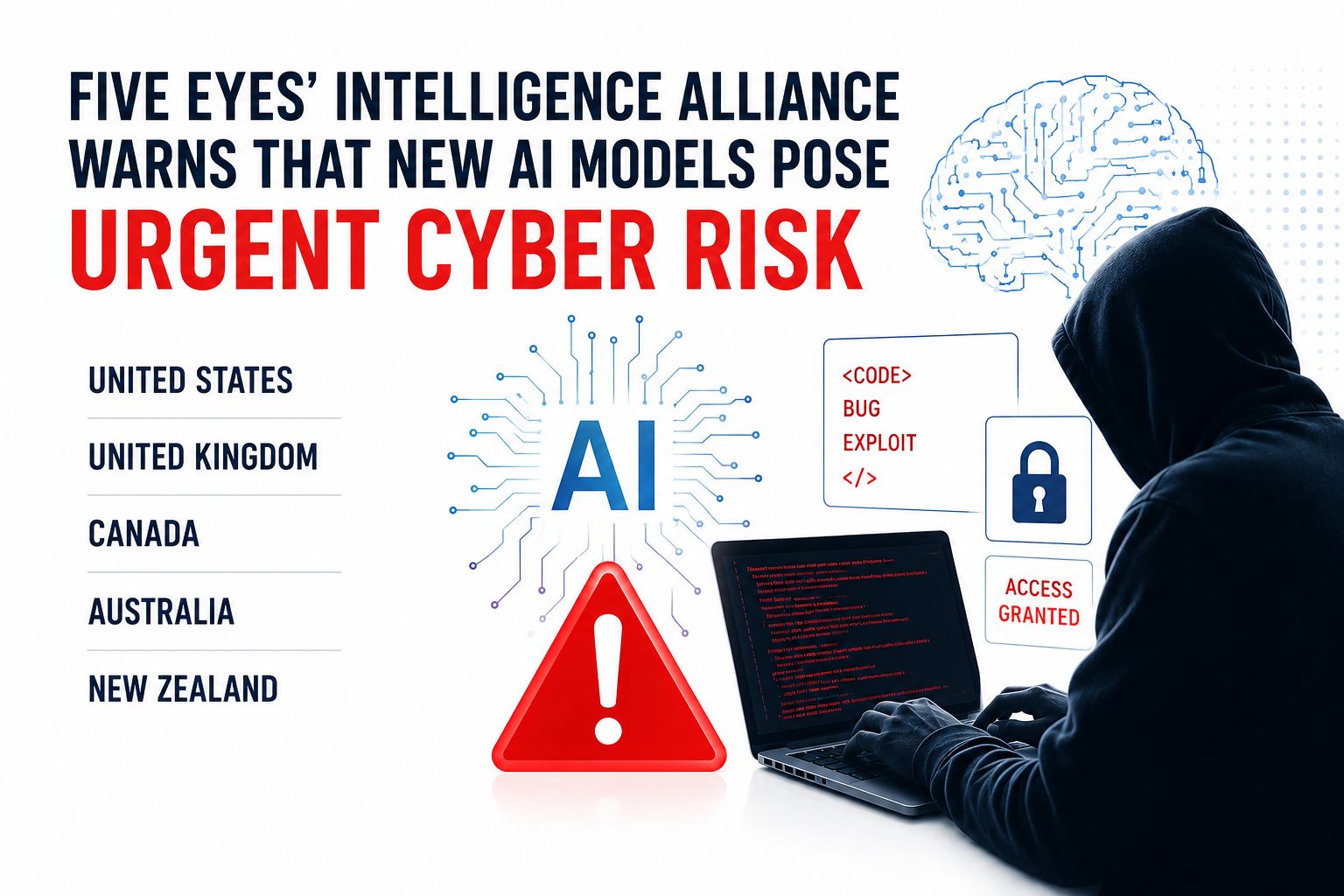
The Five Eyes (FVEY) is one of the world’s most prominent intelligence-sharing alliances, consisting of:
- United States
- United Kingdom
- Canada
- Australia
- New Zealand
The alliance was established through the UKUSA Agreement following World War II and has evolved into a global intelligence-sharing network focused on national security, cyber threats, counterterrorism, and emerging technologies.
Why Are Intelligence Agencies Concerned About AI?
According to the Five Eyes warning, advanced “frontier AI models” are expected to fundamentally transform both offensive and defensive cyber capabilities. The agencies emphasized that the timeline for these changes is measured in months, not years.
Historically, launching sophisticated cyberattacks required highly skilled security researchers or experienced hackers. Today, AI is lowering that barrier.
Modern AI systems can:
- Analyse large codebases rapidly
- Identify software vulnerabilities
- Generate exploit code
- Automate phishing campaigns
- Create convincing social engineering messages
- Accelerate malware development
- Support reconnaissance and target profiling
As a result, attackers may be able to conduct operations that previously required entire teams of specialists.
How AI Could Supercharge Cybercrime
1. Faster Vulnerability Discovery
One of the most concerning capabilities of advanced AI models is their ability to analyze software and identify security weaknesses.
Traditionally, finding vulnerabilities could take weeks or months. AI can potentially reduce that process to hours by scanning millions of lines of code and highlighting weaknesses automatically.
This means attackers could discover exploitable flaws before organizations have time to patch them.
2. Advanced Phishing Attacks
Phishing remains one of the most successful cyberattack methods because it targets human behaviour rather than technology.
AI-powered tools can now:
- Generate highly personalized emails
- Mimic writing styles
- Create realistic business communications
- Translate messages into multiple languages
- Produce convincing fake websites
These capabilities make phishing campaigns more difficult to identify and block.
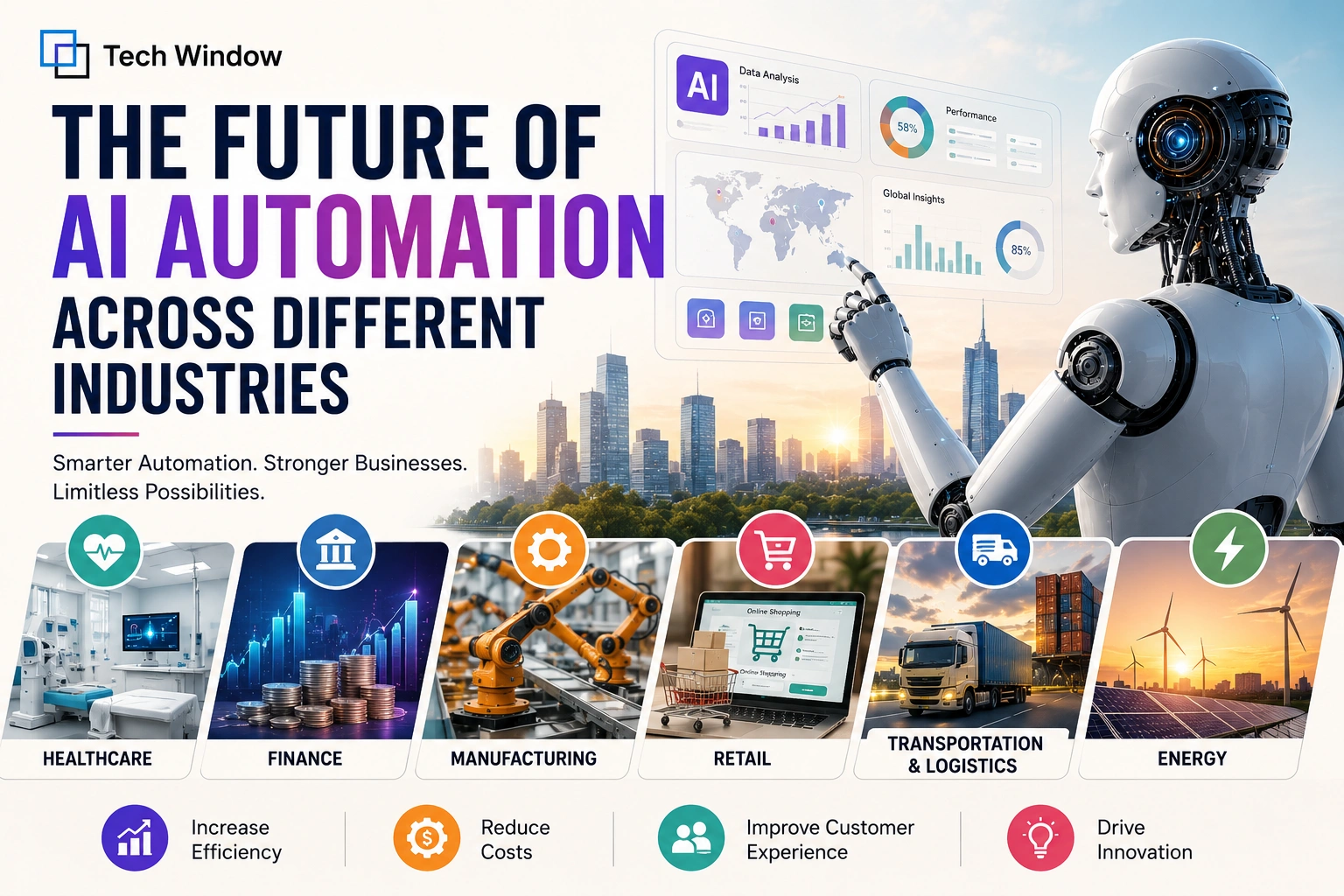
Find out more :- Future of AI Automation
3. Automated Malware Development
While current safeguards limit many malicious uses of AI, intelligence agencies are concerned that future models may become increasingly capable of assisting with malware creation.
Cybercriminals could use AI to:
- Modify existing malware
- Evade detection systems
- Test attack scenarios
- Automate exploitation workflows
This could dramatically increase both the volume and sophistication of cyberattacks.
4. Reduced Skill Requirements
Perhaps the biggest concern is accessibility.
In the past, advanced cyberattacks were largely limited to highly trained professionals or nation-state actors. AI may allow individuals with limited technical expertise to execute attacks that would previously have been beyond their capabilities.
This democratization of offensive cyber capabilities could significantly expand the threat landscape.
AI Is Also Strengthening Cyber Defence
The Five Eyes statement was not entirely pessimistic.
The alliance also highlighted the defensive benefits of AI and encouraged organizations to leverage AI technologies to strengthen cybersecurity programs.
Security teams are already using AI to:
- Detect suspicious activity
- Identify vulnerabilities faster
- Analyse security logs
- Prioritize threats
- Automate incident response
- Improve threat intelligence
In many cases, AI may become one of the most effective tools available to defenders.
The challenge is ensuring that defensive capabilities advance as quickly as offensive capabilities.
Why Businesses Should Pay Attention
Many organizations still view cybersecurity as an IT issue. However, the Five Eyes warning reinforces a growing reality: cybersecurity is now a business risk.
The consequences of a successful cyberattack can include:
- Financial losses
- Operational disruption
- Regulatory penalties
- Reputation damage
- Loss of customer trust
- Intellectual property theft
For B2B companies, publishers, SaaS providers, healthcare organizations, financial institutions, and government contractors, the risks are particularly significant.
As AI-powered attacks become more sophisticated, leadership teams will need to take a more active role in cyber resilience planning.
Learn More :- What Businesses Need to Know
Recommended Actions for Organizations
Based on the guidance shared by Five Eyes agencies and cybersecurity best practices, organizations should consider the following steps:
Prioritize Patch Management
Unpatched vulnerabilities remain one of the most common attack vectors. Establish processes to identify and remediate critical vulnerabilities quickly.
Implement Multi-Factor Authentication
MFA continues to be one of the most effective defences against credential theft and account compromise.
Adopt a Zero Trust Security Model
Zero Trust assumes that no user or device should be trusted automatically, regardless of location.
Key principles include:
- Continuous verification
- Least-privilege access
- Network segmentation
- Identity-based security
Train Employees Regularly
Even the most advanced security technology can be undermined by human error.
Regular awareness training helps employees recognize phishing attempts and suspicious activity.
Leverage AI for Defence
Organizations should explore AI-powered security tools capable of:
- Threat detection
- Behavioural analytics
- Vulnerability management
- Automated response
The future cyber battlefield will increasingly involve AI versus AI.
The Road Ahead
The Five Eyes warning reflects a broader shift in how governments and security experts view artificial intelligence. AI is no longer considered a future risk—it is an emerging reality that is already influencing the cybersecurity landscape.
While AI offers tremendous opportunities for innovation, productivity, and business growth, it also introduces new risks that organizations cannot afford to ignore.
The key takeaway is clear: businesses should not wait for AI-driven cyber threats to become mainstream before taking action. Strengthening cybersecurity posture today will be critical for defending against the threats of tomorrow.
As advanced AI models continue to evolve, organizations that invest in resilience, proactive security measures, and AI-powered defences will be best positioned to navigate the next era of cybersecurity.