Best Business Technology Trends to Watch in 2026

Businesses are continuing to change the way they work, compete and develop with the use of technology. For 2026, the investments are geared towards Artificial Intelligence (AI), automation, cybersecurity, cloud computing, and data-driven decision-making, all of which are crucial elements to keeping organizations ahead in the digital age.
Companies adopting new technologies are increasing their productivity, enriching their customers’ experience, cutting down on costs, and finding new ways to innovate. Meanwhile, companies that do not adapt may be left behind by their competitors that are using technology to get a strategic edge.
With those digital advancements, it is crucial that business leaders, entrepreneurs and professionals know the latest business technology trends.
In this Tech Window guide, we’ll delve into the top business technology trends to anticipate in 2026 and their impact on industries around the world.
Why Business Technology Matters More Than Ever
Technology is no longer just a support function—it is now a core driver of business success.
Modern businesses rely on technology to:
- Improve operational efficiency
- Enhance customer experiences
- Enable remote and hybrid work
- Strengthen cybersecurity
- Support innovation
- Drive revenue growth
The organizations that successfully adopt new technologies are often the ones that lead their industries.
1. Artificial Intelligence Becomes a Business Essential
Artificial Intelligence is no longer a competitive advantage reserved for large enterprises. It is becoming a standard business tool across organizations of all sizes.
Businesses are using AI for:
- Customer service automation
- Predictive analytics
- Content generation
- Fraud detection
- Business intelligence
- Workflow optimization
AI-powered systems help organizations process information faster and make smarter decisions.
Visit Now For More Information :- The Importance of Data Visualization in Business Intelligence
Why It Matters
Companies that effectively implement AI can improve efficiency, reduce costs, and gain deeper insights into customer behavior.
2. AI Agents and Autonomous Workflows
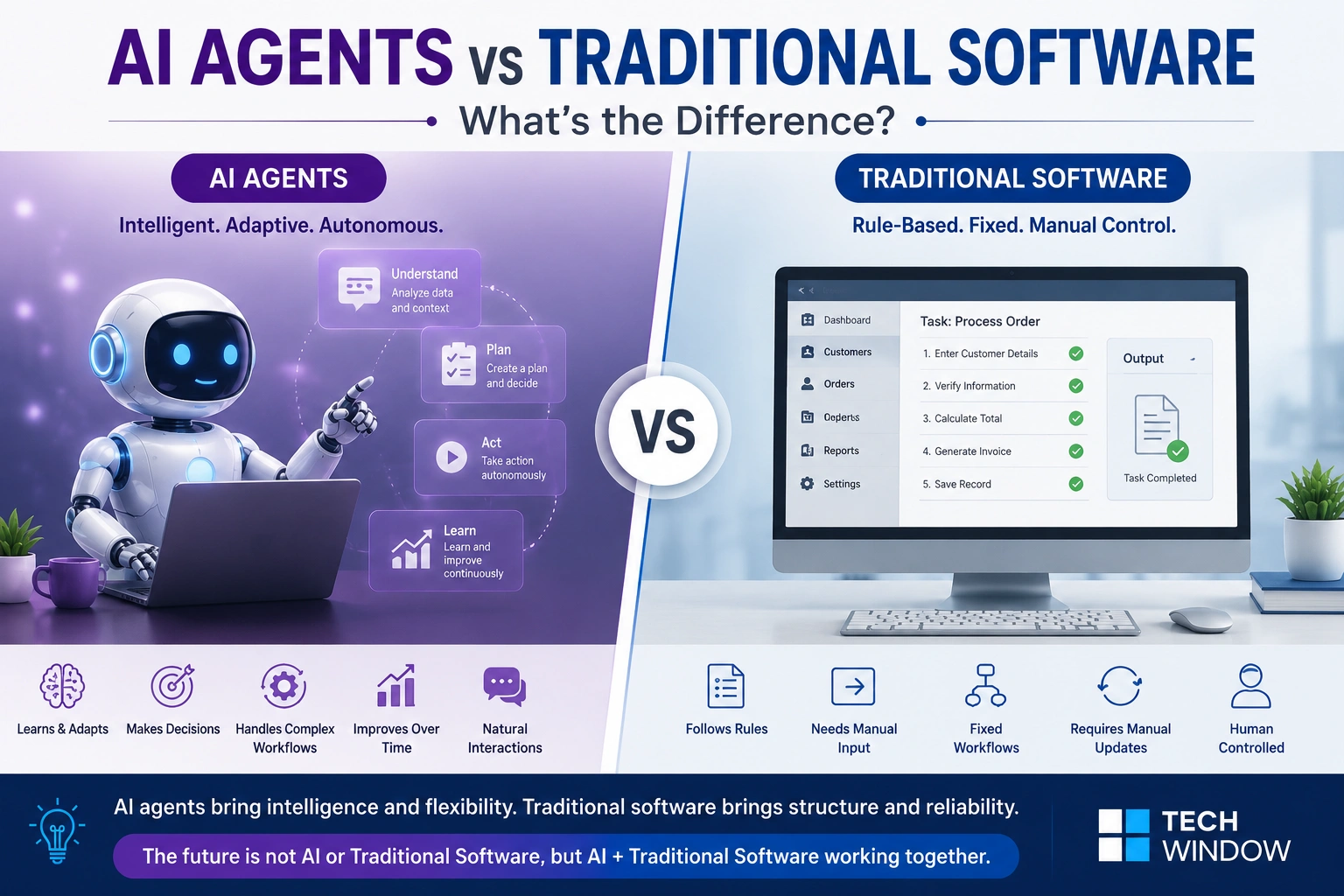
One of the biggest developments in 2026 is the rise of AI Agents.
Unlike traditional automation tools, AI agents can:
- Understand objectives
- Make decisions
- Complete multi-step tasks
- Adapt to changing conditions
Businesses are deploying AI agents to manage:
- Customer support
- Sales operations
- Marketing campaigns
- Administrative workflows
- Internal business processes
This trend is expected to redefine workplace productivity.
Read More :- AI Agents in Business: The Next Wave of Workplace Automation
3. Cybersecurity Takes Center Stage
As digital transformation accelerates, cyber threats continue to evolve.
Businesses face increasing risks from:
- Ransomware attacks
- Phishing scams
- Data breaches
- AI-powered cybercrime
- Supply chain attacks
Organizations are investing heavily in cybersecurity technologies and employee awareness programs.
Key Security Priorities
- Multi-factor authentication (MFA)
- Zero Trust Security
- Endpoint protection
- Security awareness training
- Threat detection platforms
Cybersecurity is no longer optional—it is a business necessity.
4. Zero Trust Security Adoption
Traditional security models assume users inside the network can be trusted.
Zero Trust follows a different philosophy:
“Never Trust, Always Verify.”
Organizations are implementing Zero Trust strategies to:
- Verify every user
- Authenticate every device
- Restrict unnecessary access
- Continuously monitor activity
As remote work expands, Zero Trust has become one of the most important cybersecurity frameworks.
Learn More :- What Is Zero Trust Security
5. Business Intelligence and Advanced Analytics
Data has become one of the most valuable business assets.
Business Intelligence (BI) platforms help organizations:
- Analyze performance
- Identify trends
- Monitor KPIs
- Improve decision-making
Advanced analytics allows businesses to move beyond historical reporting and predict future outcomes.
Benefits
- Better forecasting
- Faster decision-making
- Increased operational visibility
- Competitive advantage
Companies that use data effectively are often better positioned for growth.
6. Cloud Computing Continues to Expand
Cloud technology remains a key driver of digital transformation.
Businesses are adopting cloud solutions because they offer:
- Scalability
- Flexibility
- Cost savings
- Improved collaboration
- Enhanced accessibility
Many organizations now operate in hybrid and multi-cloud environments.
Cloud platforms support everything from business applications to AI-powered workloads.
7. Edge Computing Gains Momentum
As businesses generate more data, sending everything to centralized cloud servers can create delays.
Edge Computing processes data closer to where it is generated.
Examples include:
- Smart manufacturing
- IoT devices
- Connected vehicles
- Retail systems
Benefits include:
- Faster response times
- Reduced latency
- Improved efficiency
- Better real-time analytics
Edge computing is becoming increasingly important for modern enterprises.
8. Hyperautomation
Hyperautomation combines:
- Artificial Intelligence
- Robotic Process Automation (RPA)
- Machine Learning
- Workflow Automation
The goal is to automate as many business processes as possible.
Organizations use hyperautomation to streamline:
- Finance operations
- HR processes
- Customer service
- Supply chain management
This trend helps businesses reduce costs and improve productivity.
9. Digital Employee Experience Platforms
Employee experience is becoming a major business priority.
Companies are implementing digital workplace solutions that improve:
- Collaboration
- Communication
- Productivity
- Employee engagement
Modern platforms integrate:
- AI assistants
- Collaboration tools
- Knowledge management systems
- Workflow automation
A positive employee experience often leads to higher retention and performance.
10. Sustainable Technology Initiatives
Businesses are increasingly focused on sustainability.
Technology is helping organizations:
- Reduce energy consumption
- Monitor carbon emissions
- Optimize resource usage
- Improve operational efficiency
Green IT practices are becoming a key component of corporate sustainability strategies.
Consumers and investors increasingly favor environmentally responsible organizations.
11. Digital Twins Revolutionizing Industries
Digital Twin technology creates virtual representations of physical assets.
Organizations use digital twins to:
- Simulate operations
- Predict maintenance needs
- Improve performance
- Reduce downtime
Industries benefiting from digital twins include:
- Manufacturing
- Healthcare
- Transportation
- Construction
This technology is expected to grow significantly in the coming years.
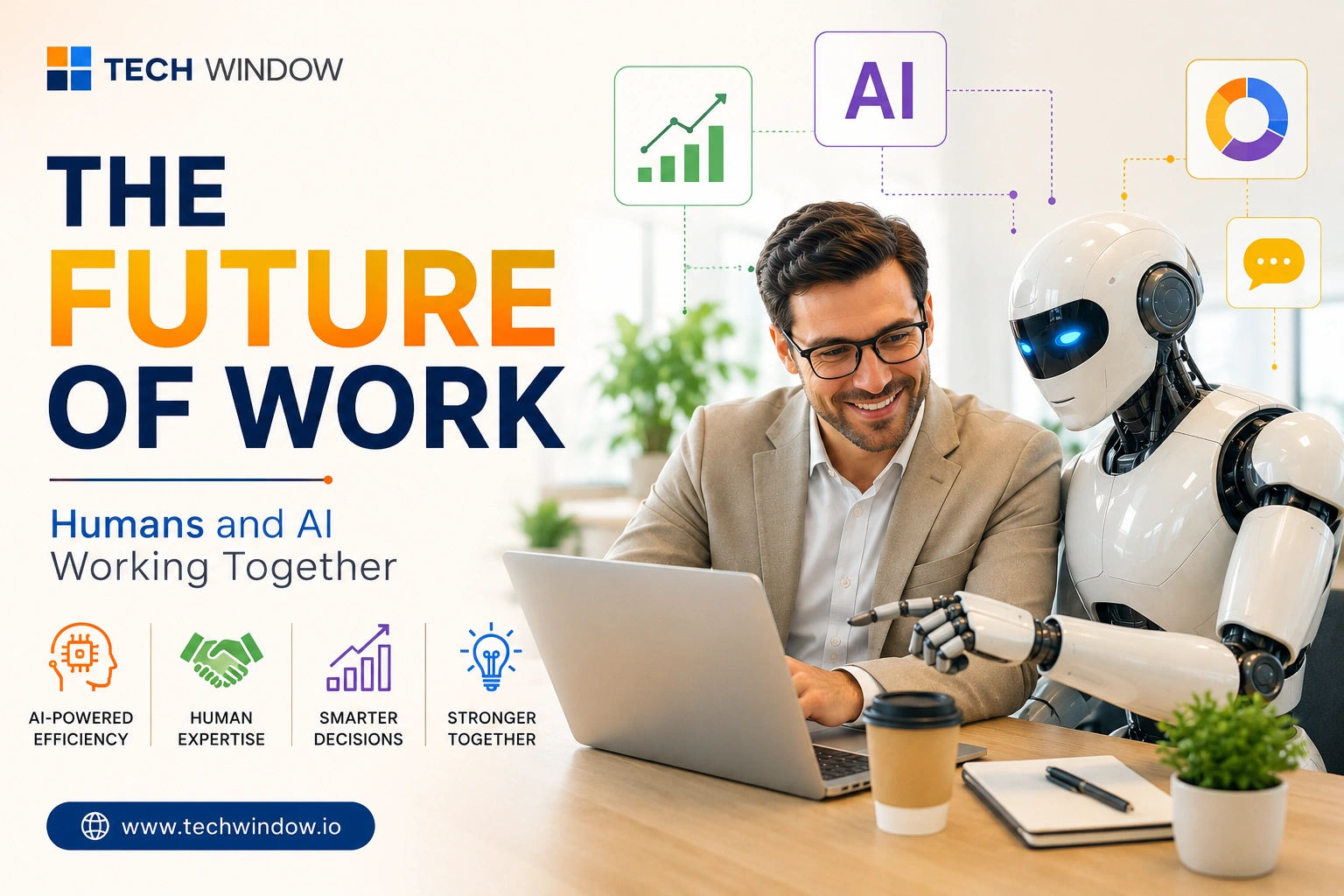
12. Human-AI Collaboration
The future workplace is not about AI replacing humans.
Instead, it is about humans and AI working together.
AI handles:
- Data analysis
- Repetitive tasks
- Automation
Humans contribute:
- Creativity
- Leadership
- Strategic thinking
- Emotional intelligence
Organizations that combine both strengths are achieving the best results.
Emerging Technologies to Watch
Several technologies are expected to gain momentum beyond 2026:
Quantum Computing
Potentially capable of solving problems beyond traditional computing capabilities.
Extended Reality (XR)
Combining virtual, augmented, and mixed reality experiences.
Blockchain Applications
Expanding beyond cryptocurrency into supply chain management and digital identity.
6G Connectivity
The next evolution of wireless communication.
These innovations could significantly reshape the business landscape over the next decade.
How Businesses Can Prepare for These Trends
To remain competitive, organizations should:
Invest in Digital Skills
Employees need training in emerging technologies.
Prioritize Cybersecurity
Security should be integrated into every technology initiative.
Embrace Data-Driven Decision-Making
Organizations should leverage analytics to guide strategy.
Explore AI Opportunities
Businesses should identify areas where AI can improve efficiency.
Build a Culture of Innovation
Encouraging experimentation helps organizations adapt more effectively.
Preparation today can create significant advantages tomorrow.
The Future of Business Technology
The pace of technological change continues to accelerate.
Businesses that embrace innovation will be better positioned to:
- Improve productivity
- Enhance customer experiences
- Strengthen security
- Reduce costs
- Create new revenue opportunities
Technology will continue to shape every aspect of business operations, making digital transformation an ongoing priority.
Conclusion
The business technology landscape in 2026 is defined by Artificial Intelligence, AI agents, cybersecurity, cloud computing, data analytics, hyperautomation, and digital transformation. These technologies are helping organizations become more efficient, secure, and competitive in an increasingly connected world.
Those companies that invest in the appropriate technologies now will be ready to face the challenges and opportunities of the future.
We at Tech Window feel that it is crucial to grasp the key trends of emerging technology, if businesses are looking for long-term success in the digital economy.