


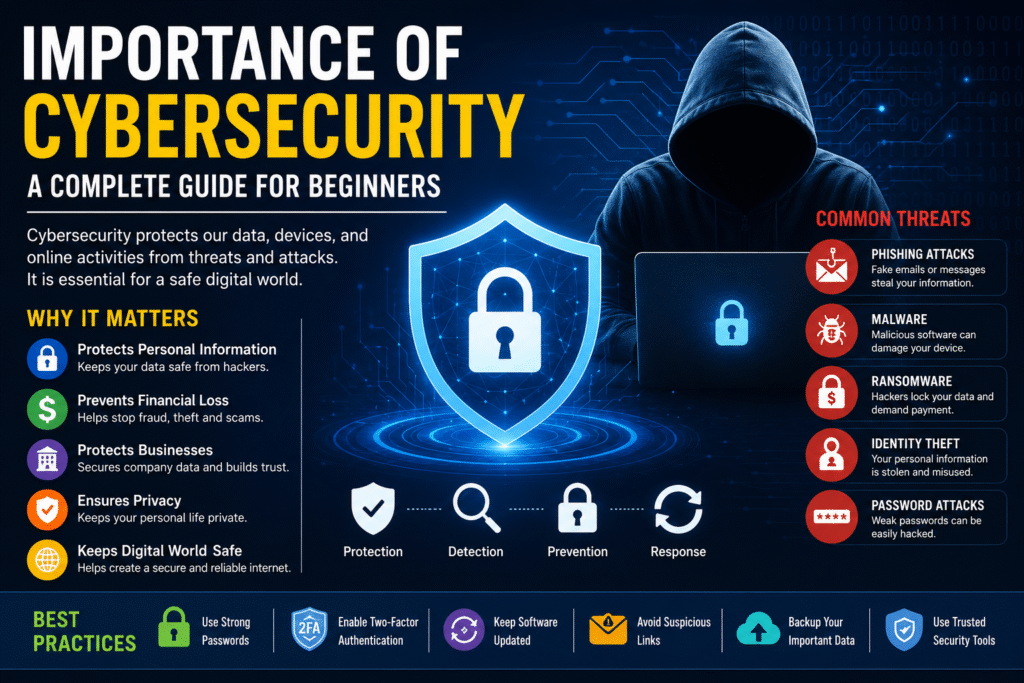
Cyber security is a must have in today’s digital world. The internet is crucial to almost everything we do. Online banking, social media, cloud storage, digital payments and smart devices are a part of our everyday lives. Technology can make things easier, but also provide an opportunity for cybercriminals to exploit vulnerabilities.
Cybersecurity is used to safeguard computers, networks, systems, and personal information against unauthorized access and cyber attacks. It doesn’t matter if you’re a student, a professional, a business owner or just a casual internet user, you need to understand cybersecurity.
Tech Window beginner’s guide explains why cybersecurity is important, what some of the most common cyber threats are, and how to stay safe online.
What Is Cybersecurity?
Cybersecurity is the process of safeguarding digital systems, networks, software and data against cyber threats.
Its primary goal is to prevent:
- Unauthorized access
- Data theft
- Financial fraud
- Malware infections
- System disruptions
Cybersecurity is an amalgamation of technology, processes and best practices that provides a secure digital environment.
Why Is Cybersecurity Important?
With the increasing use of the internet, cybercrime is becoming more sophisticated. One breach could lead to financial losses, identity theft, and tarnished reputations.
Here are the main reasons why cybersecurity is important.
1. Protects Personal Information
Users give out personal details on a daily basis.
This includes:
- Names
- Addresses
- Phone numbers
- Banking information
- Login credentials
Cybersecurity is essential to safeguarding this valuable information against hackers.
2. Prevents Financial Loss
The financial data is a favorite among the targets of cybercriminals.
They try to trick consumers and businesses into giving up money through phishing, fake Web sites and malicious software.
Robust cyber security protocols minimize the chances of financial fraud.
3. Protects Businesses
Important customer and company information is kept by the businesses.
A cyber attack can lead to:
- Data breaches
- Business interruptions
- Revenue loss
- Legal consequences
Organizations can develop trust and keep operations operating securely through the implementation of cybersecurity.
4. Safeguards Digital Assets
Digital assets include:
- Documents
- Databases
- Intellectual property
- Software
The protection of these assets is vital to both persons and groups.
5. Supports Privacy
With the advent of the digital era, privacy has become a growing concern.
With the help of cybersecurity tools, unauthorized access to personal and confidential information can be prevented.
Common Cyber Threats
To understand cybersecurity, beginners should know the most common online threats.
Phishing Attacks
Phishing is a fraud through fake emails, messages or web pages that are meant to steal user information.
Often attackers will disguise themselves as trusted organizations.
Malware
Malware is software that is created to cause damage or steal information.
Examples include:
- Viruses
- Worms
- Trojans
- Spyware
Ransomware
A ransomware program will encrypt files and request payment to regain access to them.
P irregularly targets businesses or individuals.P often targets businesses and individuals.
Password Attacks
Having weak passwords puts accounts at risk.
Hackers employ automated tools to access accounts with unauthorized access and/or guess passwords.
Identity Theft
Cybercriminals steal personal information in order to defraud the victim.
Key Benefits of Cybersecurity
There are several benefits of Cyber Security.
Improved Data Protection
Information is well protected from unauthorized users.
Better Business Continuity
Security systems minimize downtime due to cyber attacks.
Increased Customer Trust
Customers will be more inclined to trust companies that safeguard data.
Regulatory Compliance
There are a number of industries that have security standards and regulations that organizations must adhere to.
Reduced Cyber Risks
Good security measures greatly reduce the risk of successful attacks.
Also Read this Blog :- Future of AI in Cyber Security and Online Safety
Cybersecurity Best Practices for Beginners
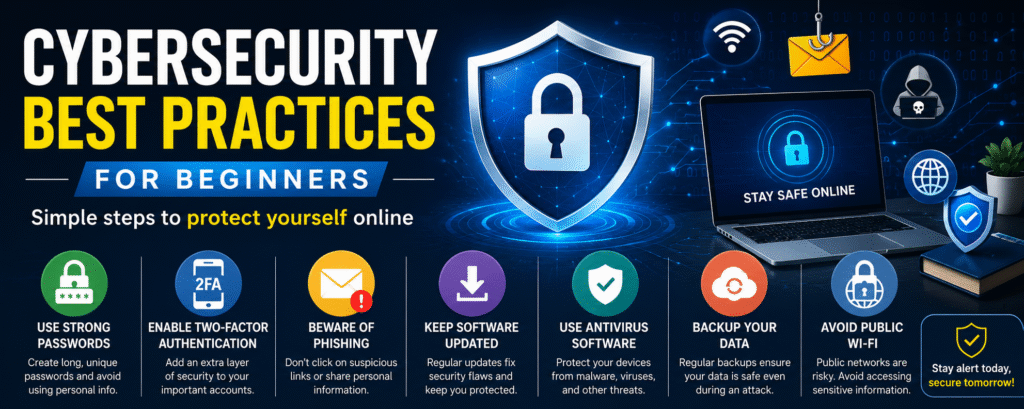

Simple cyber security measures can help anyone be more secure online.
Use Strong Passwords
Create passwords that:
- Are long and unique
- Use numbers and symbols
- Avoid personal information
Do not use the same password for more than one account.
Enable Two-Factor Authentication (2FA)
Two factor authentication provides an additional layer of security.
If someone has your password, they can’t log in without doing the second security check.
Keep Software Updated
Security patches are important and are frequently incorporated into software updates.
Current updates can safeguard devices against known vulnerabilities.
Avoid Suspicious Links
Avoid opening links from people who you don’t know or trust.
Never open attachments or type in information from email or text messages without checking it first.
Install Security Software
Good anti-virus and security programs will identify and prevent threats from causing harm.
Backup Important Data
If a cyber attack happens, then important files can be recovered from regular backups.
Cybersecurity in Everyday Life
Cybersecurity affects more than just computers.
It is important for:
Online Banking
Protecting financial transactions and account information.
Social Media
Preventing account hacking and identity theft.
Remote Work
Securing company data and communication channels.
E-Commerce
Keeping payment information safe during online purchases.
Smart Devices
Protecting connected devices from unauthorized access.
The Role of Artificial Intelligence in Cybersecurity
Artificial Intelligence is changing cybersecurity.
AI-powered systems can:
- Detect threats faster
- Monitor networks in real time
- Identify unusual behavior
- Respond to attacks automatically
As cyber threats become more advanced, AI is becoming an important part of modern security strategies.
Challenges in Cybersecurity
With the advancement of technology comes several challenges of cyber security.
Increasing Cyber Threats
Hackers are continually inventing new attack strategies.
Human Error
Security incidents are largely due to user error.
Rapid Technological Change
As technology advances, so do the security threats.
Skill Shortages
Hiring qualified cybersecurity experts is a problem for many organizations.
The Future of Cybersecurity
The future of cybersecurity will focus on:
- AI-powered protection
- Zero-trust security models
- Cloud security improvements
- Advanced threat detection
- Enhanced privacy controls
Cybersecurity will be increasingly important with digital transformation continuing.
Final Thoughts
One of the most critical things of today’s technology is cybersecurity. It helps safeguard personal data, prevents financial losses and ensures that businesses run safely.
The first step to being safe online is to learn about cybersecurity. Everyone can take the steps necessary to minimize their risk by following basic security precautions and knowing what new threats to look out for.
We strongly feel that everyone should be aware of cyber security at Tech Window. The more you know about digital security, the more ready you’ll be to navigate the digital world safely in today’s connected world.


