


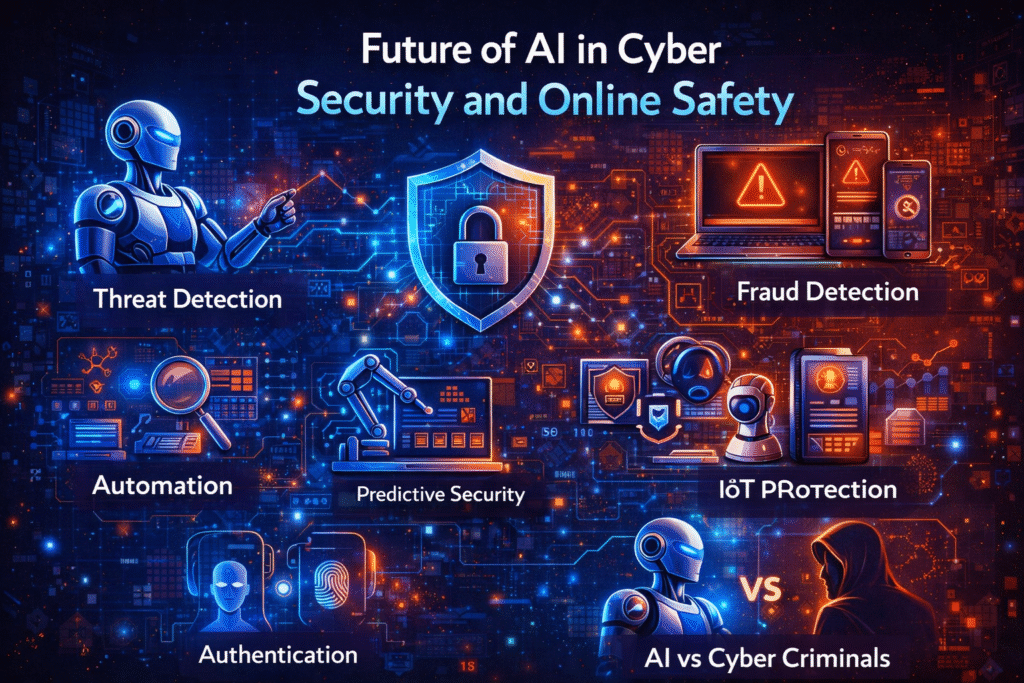
Artificial Intelligence is transforming the digital world. In 2026, AI is not only used for automation and productivity but also plays a major role in cyber security and online safety.
As cyber threats become more advanced, traditional security systems are no longer enough. AI is helping individuals and businesses detect threats faster and respond more effectively.
In this article by Tech Window, we explore the future of AI in cyber security and how it connects with other important topics like cyber threats and human intelligence.
What Is AI in Cyber Security?
AI in cyber security refers to the use of intelligent systems to detect, prevent, and respond to cyber threats.
These systems analyze large amounts of data to identify unusual patterns. This helps detect attacks before they cause damage.
If you want a complete beginner-friendly overview, check our guide:
👉 Future of AI in Cyber Security and Online Safety | AI Security Guide
1. AI-Powered Threat Detection
One of the biggest advantages of AI is its ability to detect threats in real time.
Traditional security systems rely on predefined rules. AI learns from data and improves over time.
AI can:
- Identify unusual behavior
- Detect malware and viruses
- Prevent unauthorized access
This makes threat detection faster and more accurate.
2. Automation of Security Tasks
AI can automate many security tasks that were previously done manually.
For example:
- Monitoring network traffic
- Scanning for vulnerabilities
- Responding to alerts
Automation reduces human error and improves efficiency.
3. Predictive Security Systems
AI can predict cyber attacks before they happen.
By analyzing past data, AI systems can:
- Detect weak points
- Identify possible risks
- Prevent attacks early
This proactive approach is becoming very important in 2026.
4. AI in Fraud Detection
AI is widely used in detecting online fraud. Many banks and online platforms use AI to monitor transactions.
It helps detect:
- Suspicious activity
- Fake accounts
- Identity theft
This improves trust and security for users.
5. Improved Authentication Systems
Passwords alone are no longer enough.
AI is improving login systems using:
- Face recognition
- Fingerprint scanning
- Behavior tracking
These methods make accounts more secure.
6. AI vs AI: The Cyber Battle
AI is used by both security experts and hackers.
Hackers use AI to:
- Create advanced phishing attacks
- Break passwords faster
- Automate attacks
This creates a constant battle between attackers and defenders.
To understand this concept deeply, read:
👉 AI vs Human Intelligence: What the Future Looks Like | Tech Window
7. Protection for Smart Devices (IoT)
Smart devices are increasing rapidly.
AI helps protect:
- Smart homes
- Wearable devices
- Connected cars
It monitors activity and blocks suspicious behavior.
8. Faster Response to Cyber Attacks
AI can react instantly to cyber threats.
It can:
- Block hackers
- Stop suspicious logins
- Alert users in real time
This reduces damage and improves safety.
9. Understanding Modern Cyber Threats
To fully understand AI’s role in security, it is important to know current cyber risks.
You can explore detailed threats here:
👉 Top Cyber Security Threats in 2026 | Tech Window
This helps you understand what AI is protecting against.
10. Challenges of AI in Cyber Security
AI is powerful, but it has some challenges:
- High cost
- Dependence on data
- Risk of misuse
Companies must use AI carefully and responsibly.
11. Future Outlook
The future of AI in cyber security looks very strong.
We can expect:
- Smarter security systems
- Better fraud detection
- Automated protection
- Stronger privacy tools
AI will continue to improve online safety for everyone.
Final Thoughts
AI is changing cyber security in a big way. It offers faster detection, better protection, and smarter solutions.
However, AI alone is not enough. Users must also follow safe online practices.
At Tech Window, we believe the future will be a combination of AI technology and human awareness.
Understanding AI, cyber threats, and human intelligence together will help you stay safe in the digital world.


