


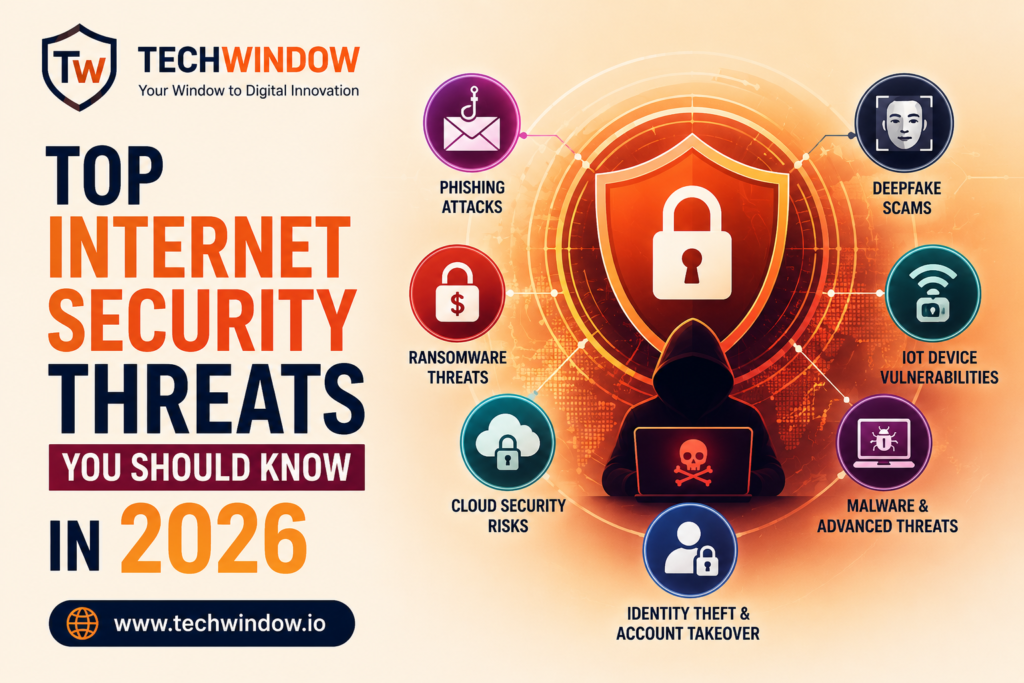
In today’s digital landscape, the safety of the web has become more crucial than ever.The security of the web is of vital importance in this day and age.
Nowadays, the internet is a necessity of life. It is used by people to communicate, to bank, to shop, for entertainment, and for conducting business. With the advancement of technology, however, cybercriminals are working to find new methods to exploit users and organizations.
Today, the internet’s security issues are growing more sophisticated, automated and hard to spot. Knowing what these threats are is the first step to keeping your personal information, financial information and digital assets safe.
In this Tech Window guide, we will look at the most harmful internet security threats you’d want to stay protected from in 2026 and how you can do so.
Why Internet Security Matters More Than Ever
The incidence and sophistication of cyber attacks are growing. The targets can be any business, government or individual.
The consequences of a successful cyber attack may include:
- Financial losses
- Identity theft
- Data breaches
- Business disruption
- Reputation damage
These risks can be minimized and sensitive information protected by strong internet security practices.
1. AI-Powered Phishing Attacks
Phishing attacks are still one of the most frequently used cyber threats but they are being made more convincing with the help of Artificial Intelligence.
AI can create personalized emails, messages, and fake websites that closely mimic actual messages.
The following are common red flags of phishing attacks:
- Information that needs to be obtained immediately.
- Suspicious links
- Unexpected attachments
- Fake login pages
Never trust anyone that sends sensitive information without first verifying.
2. Ransomware Attacks
Ransomware continues to be one of the biggest cybersecurity threats in 2026.
Encryption of files and ransom payment for file release is the way they operate.
Ransomware can affect:
- Individuals
- Small businesses
- Large enterprises
- Government organizations
To help mitigate the effects of ransomware attacks, regular backups and updated security software are essential.
3. Deepfake Scams
Deepfake is a technology that harnesses AI to produce believable audio and video content.
Deepfakes are used by cybercriminals to:
- Impersonate executives
- Conduct financial fraud
- Spread misinformation
- Confiscate confidential information by enticing workers to provide it.
A stamp of authenticity is more vital than ever as deep fake technology evolves.
4. Cloud Security Threats
Cloud migration is rapidly gaining traction with more organisations moving their data there.
Although there are numerous advantages to cloud computing, there are also some security issues.
When it comes to cloud security threats, there are a few that are common:
- Misconfigured settings
- Weak access controls
- Data exposure
- Unauthorized access
Businesses need to have robust cloud security policies in place to ensure the protection of sensitive information.
5. Credential Theft and Account Takeovers
Usernames and passwords are popular targets for cybercriminals.
Methods include:
- Phishing attacks
- Credential stuffing
- Keyloggers
- Data breaches
If they successfully access an account, they can steal information or commit fraud.
Multi-Factor Authentication (MFA) is a very effective way of minimising these risks.
6. IoT Device Vulnerabilities
The use of the Internet of Things (IoT) devices is on the rise.
Examples include:
- Smart TVs
- Security cameras
- Smart speakers
- Connected appliances
The security settings are often low for a lot of IoT devices, making them appealing targets for hackers.
Users are advised to reset the default password and ensure that the device’s firmware is kept up to date.
7. Supply Chain Attacks
Supply chain attacks are attacks on trusted software vendors or service providers.
Infiltrating multiple organizations through a supplier.
These attacks are hard for users to identify since they are based on trusted relationships.
Third party security practices should be given careful consideration by organisations.
8. Zero-Day Exploits
A zero day vulnerability is a software bug that is identified in advance of a patch.
Vendors often make it too late for cybercriminals to exploit these vulnerabilities.
Maintaining software updates and employing advanced security tools will help reduce risks.
9. Social Engineering Attacks
Social engineering deals with the manipulation of human elements not technology.
Attackers may:
- Pretend to be trusted contacts
- Request sensitive information
- Create fake emergencies
Social engineering can be prevented by training employees and raising their awareness.
10. AI-Driven Malware
Modern malware is becoming more intelligent.
AI-powered malware can:
- Adapt to security defenses
- Avoid detection
- Modify its behavior
- Spread more efficiently
Traditional antivirus solutions alone may not be enough to stop these advanced threats.
How to Protect Yourself in 2026
Use Strong Passwords
Use different passwords for each account and only use a password manager if you can.
Enable Multi-Factor Authentication
MFA adds another level of security to passwords.
Keep Software Updated
Apply patches and updates in a timely fashion.
Backup Important Data
Keep regular back-ups to restore information in the event of attack.
Be Cautious Online
Check emails, links and websites before disclosing confidential information.
Use Reliable Security Software
Many modern security products can identify and prevent many cyber attacks without interaction.
The Future of Internet Security
As attackers leverage AI and automation and employ more sophisticated methods, cybersecurity will keep developing.
The trends in the future of security are:
- AI-powered threat detection
- Zero Trust Security models
- Advanced behavioral analytics
- Cloud-native security solutions
- Automated incident response
Businesses that adopt state-of-the-art cybersecurity solutions will have a better chance of facing future cyber threats.
Conclusion
In 2026, Internet security threats are more advanced than ever. New cyber threats such as AI-powered phishing, ransomware, deepfakes, cloud risks and sophisticated malware are changing the face of cybersecurity.
Knowing the threats and the security best practices can help individuals and businesses greatly minimize their chances of being a target of cyber attacks.
Cybersecurity awareness is the building block of a safer digital future at Tech Window. Knowledge and awareness are the best ways to protect against new online risks.


