AI Agents in Business: The Next Wave of Workplace Automation
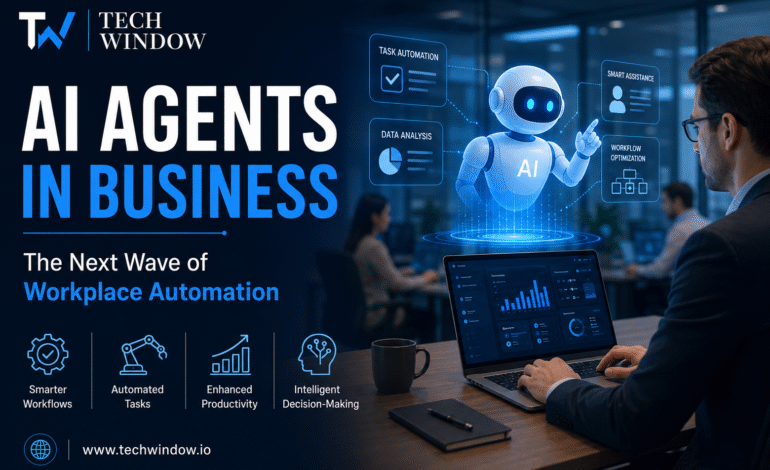

Artificial Intelligence (AI) is rapidly transforming the way businesses operate. While automation tools have been around for years, a new generation of intelligent systems known as AI agents is taking workplace automation to an entirely new level. These AI-powered assistants can analyze information, make decisions, perform tasks, and continuously learn from data, helping organizations improve efficiency and productivity.
As businesses face increasing pressure to streamline operations and reduce costs, AI agents are emerging as one of the most important technology trends of 2026. From customer service and sales to human resources and cybersecurity, AI agents are changing how work gets done.
In this guide by Tech Window, we’ll explore what AI agents are, how they work, their benefits, use cases, challenges, and why they represent the next wave of workplace automation.
What Are AI Agents?
AI agents are intelligent software systems that can perform tasks autonomously by analyzing data, understanding objectives, and making decisions with minimal human intervention.
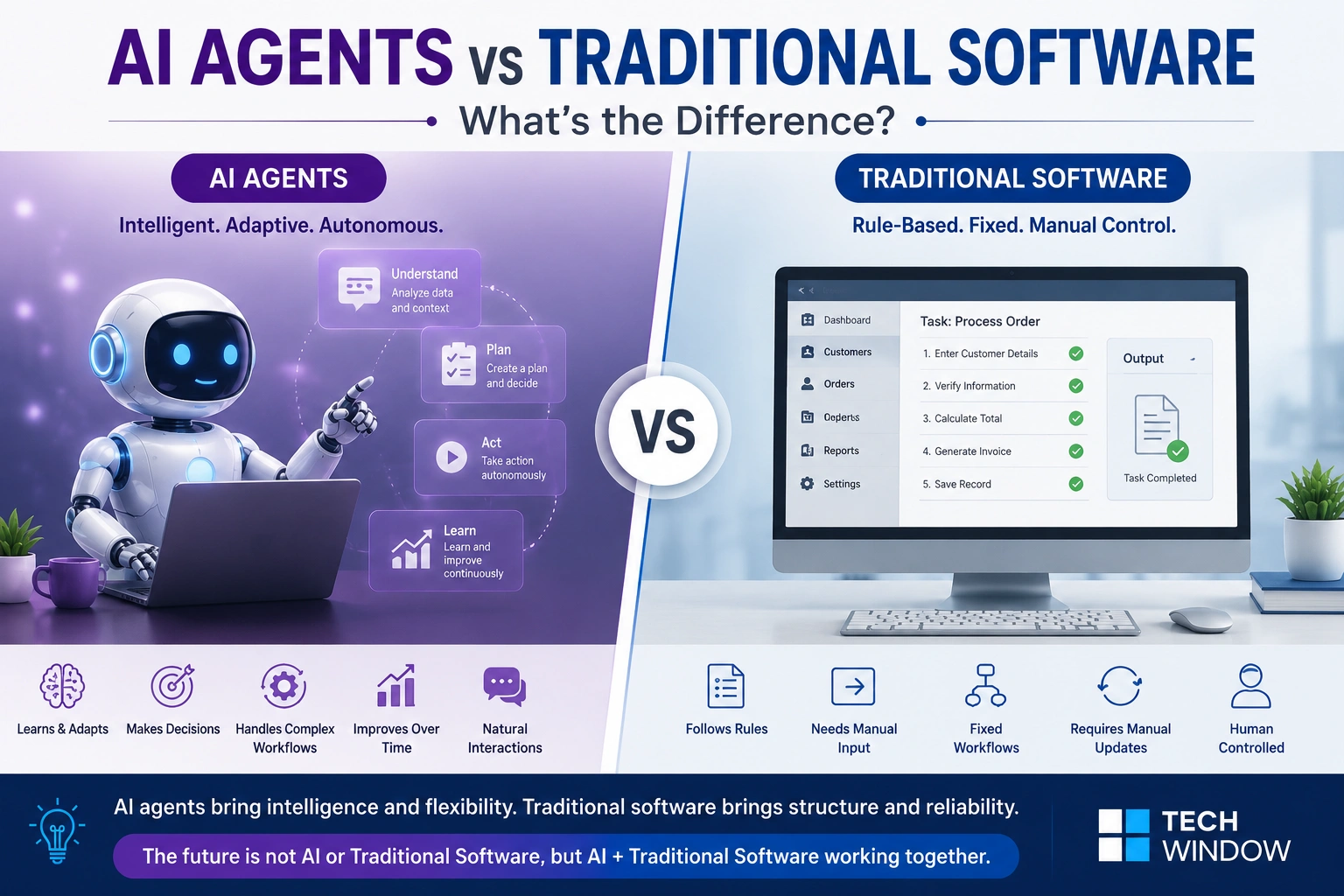
Unlike traditional automation tools that follow predefined rules, AI agents can:
- Learn from experience
- Adapt to changing situations
- Make recommendations
- Solve problems
- Interact naturally with users
- Automate complex workflows
These capabilities make AI agents significantly more powerful than traditional automation solutions.
Why Businesses Are Adopting AI Agents
Organizations are constantly looking for ways to improve productivity while reducing operational costs. AI agents help achieve these goals by automating repetitive tasks and supporting employees in their daily work.
Key reasons businesses are adopting AI agents include:
Increased Productivity
AI agents can handle routine administrative tasks, allowing employees to focus on higher-value activities.
Faster Decision-Making
By analyzing large amounts of data in real time, AI agents provide insights that help businesses make informed decisions quickly.
Cost Reduction
Automation reduces manual workloads and operational expenses.
Improved Customer Experience
AI agents can provide instant support and personalized interactions around the clock.
Scalability
Businesses can scale operations without proportionally increasing staffing costs.
How AI Agents Work
AI agents combine several advanced technologies, including:
Artificial Intelligence
AI enables agents to understand tasks, process information, and make intelligent decisions.
Machine Learning
Machine learning allows agents to improve performance over time by learning from data and interactions.
Natural Language Processing (NLP)
NLP enables AI agents to understand and respond to human language naturally.
Automation Engines
Automation systems execute tasks and workflows based on decisions made by the AI agent.
Together, these technologies create intelligent systems capable of performing complex business functions.
Common Types of AI Agents in Business
Customer Service Agents
AI-powered chatbots and virtual assistants can answer customer questions, resolve issues, and provide support 24/7.
Sales Assistants
AI agents help sales teams by analyzing leads, scheduling meetings, and generating personalized recommendations.
HR and Recruitment Agents
Human resource departments use AI agents to screen resumes, schedule interviews, and manage employee onboarding.
Financial AI Agents
These agents assist with budgeting, forecasting, fraud detection, and financial reporting.
IT Support Agents
AI-powered support systems help diagnose technical problems and resolve common IT issues automatically.
Cybersecurity Agents
Security-focused AI agents monitor networks, identify threats, and respond to suspicious activity in real time.
Real-World Applications of AI Agents
Customer Support Automation
Companies use AI agents to provide instant responses and improve customer satisfaction.
Workflow Management
AI agents automate approval processes, document handling, and internal communications.
Marketing Automation
Businesses leverage AI agents to manage campaigns, analyze customer behavior, and generate content recommendations.
Data Analysis
AI agents process large datasets and provide actionable insights for decision-makers.
Cybersecurity Monitoring
Organizations deploy AI agents to detect unusual behavior and protect digital assets from cyber threats.
Benefits of AI Agents in the Workplace
Enhanced Efficiency
AI agents complete tasks faster than manual processes.
Reduced Human Error
Automation improves accuracy and consistency.
Better Employee Experience
Employees spend less time on repetitive tasks and more time on strategic initiatives.
Continuous Availability
AI agents can operate around the clock without breaks.
Improved Business Intelligence
Organizations gain valuable insights through automated data analysis.
Challenges of Implementing AI Agents
While AI agents offer significant advantages, businesses may face several challenges.
Data Privacy Concerns
Organizations must ensure sensitive information remains protected.
Integration Complexity
Connecting AI agents with existing systems can be technically challenging.
Employee Resistance
Some employees may worry about automation replacing jobs.
Implementation Costs
Initial deployment may require investment in technology and training.
Ethical Considerations
Businesses must ensure AI systems operate transparently and fairly.
AI Agents vs Traditional Automation
|
Feature |
Traditional Automation |
AI Agents |
|
Decision-Making |
Rule-Based |
Intelligent |
|
Adaptability |
Limited |
High |
|
Learning Ability |
None |
Continuous |
|
Data Analysis |
Basic |
Advanced |
|
Human Interaction |
Minimal |
Natural Language |
|
Problem Solving |
Fixed Processes |
Dynamic Solutions |
This comparison highlights why AI agents are becoming the preferred choice for modern organizations.
The Future of AI Agents in Business
AI agents are expected to become even more advanced in the coming years.
Emerging trends include:
Autonomous Business Operations
AI agents will increasingly manage end-to-end business processes with minimal human involvement.
Multi-Agent Collaboration
Multiple AI agents will work together to complete complex tasks across departments.
Hyper-Personalization
AI agents will deliver highly personalized experiences for customers and employees.
Advanced Decision Intelligence
Future AI systems will provide strategic recommendations based on predictive analytics.
AI-Driven Digital Workforces
Organizations may deploy teams of AI agents alongside human employees to enhance productivity.
Frequently Asked Questions (FAQs)
What are AI agents in business?
AI agents are intelligent software systems that can perform tasks, make decisions, and automate workflows with minimal human intervention.
How do AI agents differ from traditional automation?
Traditional automation follows predefined rules, while AI agents can learn, adapt, and make intelligent decisions.
What industries use AI agents?
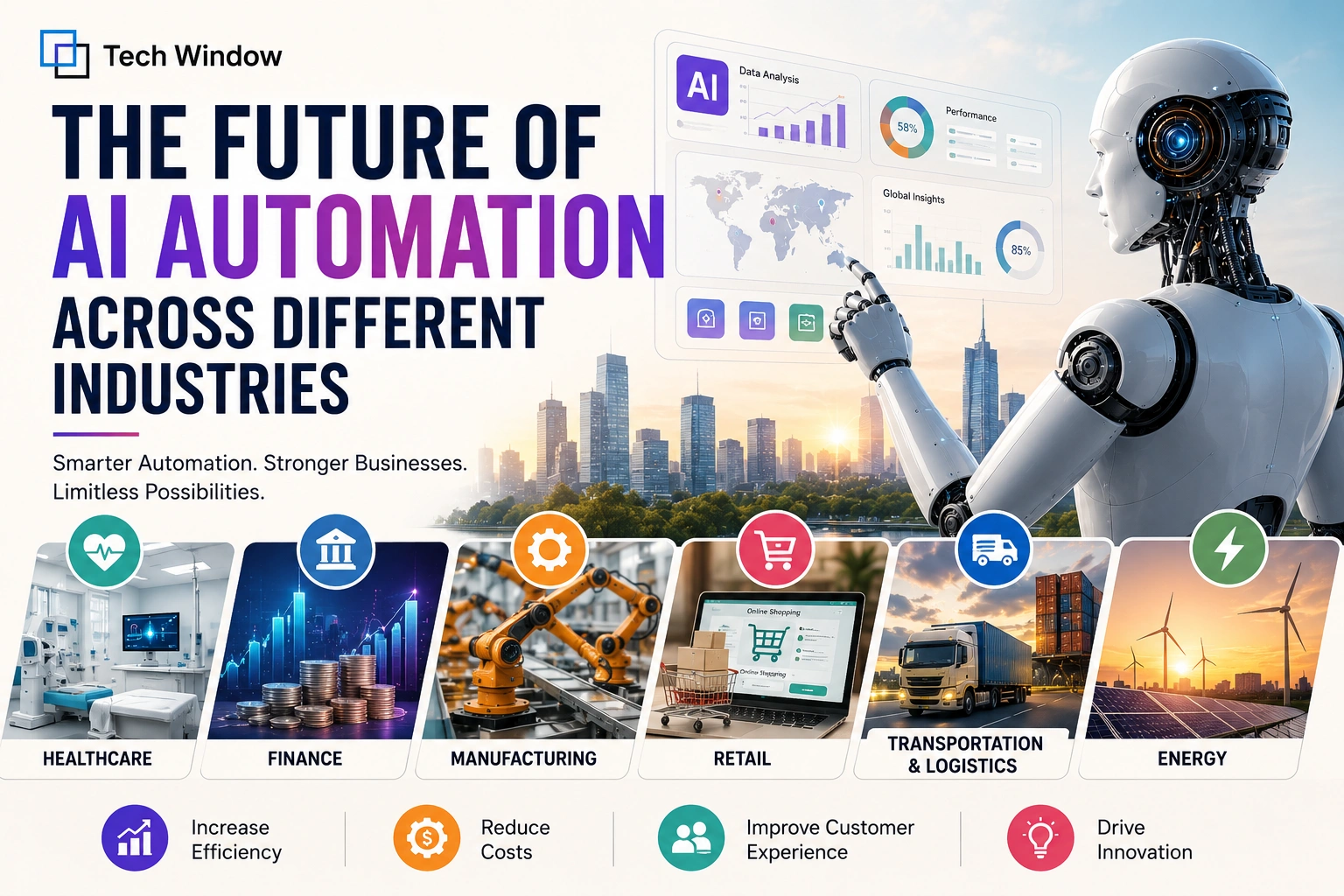
AI agents are used in healthcare, finance, retail, manufacturing, technology, and many other industries.
Can AI agents replace employees?
AI agents are designed to support employees by automating repetitive tasks rather than completely replacing human workers.
What is the future of AI agents?
The future includes autonomous operations, multi-agent collaboration, advanced analytics, and AI-driven digital workforces.
Best Practices for Adopting AI Agents
Businesses should:
- Start with clearly defined use cases
- Choose scalable AI solutions
- Ensure data quality and security
- Train employees on AI tools
- Monitor performance regularly
- Maintain human oversight for critical decisions
Following these practices helps maximize the benefits of AI adoption.
Conclusion
AI agents are rapidly becoming the next wave of workplace automation. By combining artificial intelligence, machine learning, and automation capabilities, these intelligent systems are transforming how businesses operate.
From customer service and sales to cybersecurity and data analysis, AI agents help organizations improve efficiency, reduce costs, and make smarter decisions. While challenges remain, the benefits of AI-powered automation are driving widespread adoption across industries.
As digital transformation continues to accelerate, businesses that embrace AI agents today will be better positioned to compete in the increasingly automated workplace of the future.
At Tech Window, we believe AI agents will play a critical role in shaping the next generation of business innovation and workplace productivity.