
What Is Data Security? A Complete Guide for Beginners
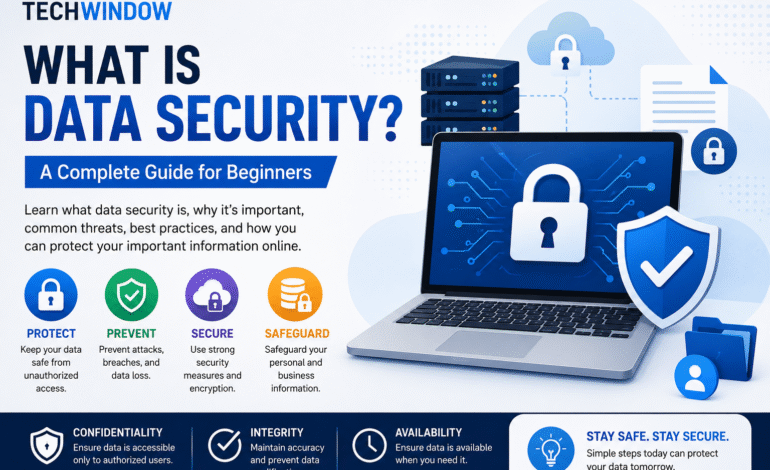

In today’s digital world, data is one of the most valuable assets. Every day, individuals and businesses generate, store, and share massive amounts of information online. From personal photos and emails to financial records and business documents, data plays a critical role in our daily lives.
However, as the amount of digital information grows, so do cyber threats. Hackers, malware, and cybercriminals are constantly looking for ways to access sensitive information. This is why data security has become more important than ever.
In this comprehensive guide by Tech Window, you’ll learn what data security is, why it matters, common threats, best practices, and how individuals and organizations can protect their valuable information.
What Is Data Security?
Data security refers to the process of protecting digital information from unauthorized access, theft, corruption, or loss.
It involves various technologies, policies, and practices designed to ensure that data remains:
- Confidential
- Accurate
- Available when needed
The primary goal of data security is to protect sensitive information from cyber threats while maintaining privacy and trust.
Why Is Data Security Important?
Data is essential for both individuals and organizations. Losing important information or having it stolen can lead to serious consequences.
Key reasons data security matters include:
Protecting Personal Information
Personal data includes:
- Names
- Addresses
- Phone numbers
- Email accounts
- Banking details
Data security helps prevent identity theft and financial fraud.
Preventing Financial Losses
Cyber attacks often target financial information.
A successful attack can result in:
- Unauthorized transactions
- Business disruptions
- Recovery costs
- Legal penalties
Strong data security reduces these risks.
Maintaining Business Reputation
Customers expect organizations to protect their information.
A data breach can damage trust and harm a company’s reputation.
Supporting Regulatory Compliance
Many industries must follow data protection regulations.
Strong security measures help organizations comply with legal requirements.
Types of Data That Need Protection
Not all data is the same.
Some information is more sensitive and requires stronger protection.
Personal Data
Information that identifies an individual.
Examples include:
- Full name
- Date of birth
- Government ID numbers
Financial Data
Information related to money and transactions.
Examples include:
- Credit card numbers
- Bank account details
- Payment records
Business Data
Organizations must protect:
- Customer records
- Employee information
- Contracts
- Intellectual property
Healthcare Data
Medical information is highly sensitive.
Healthcare providers must secure patient records and treatment histories.
Common Data Security Threats
Understanding threats is the first step toward protecting data.
Malware Attacks
Malware is malicious software designed to damage systems or steal information.
Common types include:
- Viruses
- Trojans
- Spyware
- Worms
Phishing Attacks
Phishing attacks trick users into sharing sensitive information through fake emails, websites, or messages.
These attacks often target:
- Passwords
- Banking information
- Login credentials
Ransomware
Ransomware encrypts files and demands payment to restore access.
It is one of the fastest-growing cyber threats worldwide.
Insider Threats
Sometimes security risks come from within an organization.
Employees or contractors may intentionally or accidentally expose sensitive data.
Data Breaches
A data breach occurs when unauthorized individuals gain access to confidential information.
Data breaches can affect both individuals and businesses.
Core Principles of Data Security
Data security is built around three important principles known as the CIA Triad.
Confidentiality
Confidentiality ensures that only authorized users can access data.
Methods include:
- Password protection
- Encryption
- Access controls
Integrity
Integrity ensures that data remains accurate and unchanged.
Security systems prevent unauthorized modifications.
Availability
Availability ensures that data is accessible when needed.
Organizations use backups and disaster recovery plans to maintain availability.
Essential Data Security Techniques
Organizations use various methods to protect information.
Encryption
Encryption converts data into unreadable code.
Only authorized users with the correct key can access the information.
Encryption protects:
- Emails
- Files
- Online transactions
Access Control
Access control limits who can view or modify data.
Users receive permissions based on their roles.
Multi-Factor Authentication (MFA)
MFA adds an extra layer of security.
Users must provide multiple verification methods before accessing accounts.
Examples include:
- Passwords
- OTP codes
- Biometric verification
Data Backup
Regular backups help recover information if data is lost or damaged.
Backups should be stored securely and updated frequently.
Antivirus and Security Software
Security software helps detect and block malicious threats before they compromise systems.
Data Security Best Practices for Beginners
Everyone can improve their data security by following simple habits.
Use Strong Passwords
Create passwords that are:
- Unique
- Long
- Difficult to guess
Avoid using personal information.
Enable Multi-Factor Authentication
Always activate MFA when available.
This significantly improves account security.
Keep Software Updated
Software updates often include important security patches.
Regular updates reduce vulnerabilities.
Avoid Suspicious Links
Never click links from unknown sources.
Verify emails and messages before opening attachments.
Secure Your Wi-Fi Network
Use strong Wi-Fi passwords and modern encryption protocols.
Avoid conducting sensitive activities on public networks.
Backup Important Data
Maintain regular backups to protect against data loss.
Data Security for Businesses
Businesses face greater security challenges because they manage large amounts of sensitive information.
Important security measures include:
Employee Training
Employees should understand:
- Phishing risks
- Password security
- Safe browsing practices
Security Monitoring
Continuous monitoring helps identify threats quickly.
Modern organizations often use AI-powered security tools.
Incident Response Planning
Every organization should have a plan for handling security incidents.
Quick responses reduce potential damage.
The Role of AI in Data Security
Artificial Intelligence is transforming data protection.
AI-powered security systems can:
- Detect threats in real time
- Analyze user behavior
- Identify suspicious activities
- Automate threat responses
AI helps organizations improve security while reducing manual workloads.
Related articles on Tech Window:
- Future of AI in Cyber Security and Online Safety
- AI-Powered Threat Detection: The Future of Cybersecurity
- Advanced Threat Detection Methods in Cyber Security
Future Trends in Data Security
Data security continues to evolve.
Key trends for 2026 and beyond include:
AI-Powered Security
AI will play an increasingly important role in threat detection and prevention.
Zero Trust Security
Organizations are adopting Zero Trust models that verify every user and device.
Cloud Data Protection
As cloud adoption grows, cloud security will become even more important.
Privacy-Focused Technologies
Businesses are investing in technologies that enhance privacy and compliance.
Common Data Security Mistakes
Many security incidents occur because of avoidable mistakes.
Common examples include:
- Weak passwords
- Ignoring software updates
- Sharing credentials
- Poor backup practices
- Clicking unknown links
Awareness and education are essential for reducing these risks.
Conclusion
Data security is one of the most important aspects of modern technology. It protects personal information, financial data, business assets, and digital privacy from growing cyber threats.
Whether you’re an individual user or a business owner, understanding data security fundamentals can help you reduce risks and protect valuable information. At Tech Window, we believe that cybersecurity awareness starts with understanding how data is protected. By following best practices and staying informed about emerging threats, you can build a safer and more secure digital future.