
Why Data Security Is Important in the Digital Age

In today’s connected world, data has become one of the most valuable assets. Every online activity, from browsing websites and using social media to online banking and shopping, generates and stores data. As businesses and individuals increasingly rely on digital platforms, protecting sensitive information has become more important than ever.
Cybercriminals are constantly looking for opportunities to steal personal information, financial records, and business data. Without proper security measures, individuals and organizations face serious risks, including financial losses, identity theft, and reputational damage.
In this guide by Tech Window, we’ll explore why data security is essential in the digital age, the risks of poor security, and the best ways to protect valuable information.
What Is Data Security?
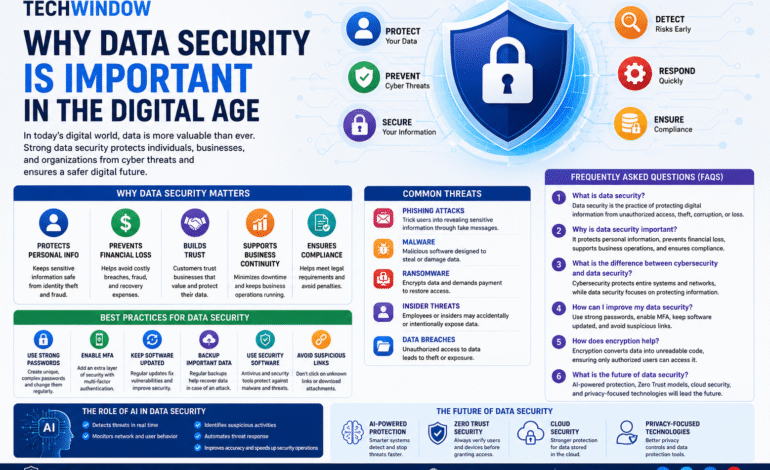
Data security refers to the practice of protecting digital information from unauthorized access, corruption, theft, or loss.
It involves various technologies, policies, and security practices designed to safeguard sensitive information.
The primary objectives of data security are:
- Confidentiality
- Integrity
- Availability
These principles ensure that data remains protected, accurate, and accessible only to authorized users.
Why Data Security Matters More Than Ever
The digital transformation of businesses and daily life has increased the amount of data stored online.
Today, organizations manage:
- Customer information
- Financial records
- Employee data
- Business documents
- Intellectual property
At the same time, cyber threats are becoming more sophisticated.
This makes data protection a critical priority.
Protecting Personal Information
Personal information is highly valuable to cybercriminals.
Examples include:
- Names
- Addresses
- Phone numbers
- Email accounts
- Government identification numbers
When this information falls into the wrong hands, it can be used for identity theft and fraud.
Strong data security helps protect users from these risks.
Preventing Financial Losses
Data breaches often result in financial damage.
Hackers may steal:
- Banking information
- Credit card details
- Payment credentials
Businesses may also face:
- Regulatory fines
- Legal expenses
- Recovery costs
Investing in data security can significantly reduce financial risks.
Building Customer Trust
Customers expect businesses to protect their information.
A security breach can quickly damage customer confidence.
When organizations demonstrate strong security practices, they build trust and strengthen long-term relationships with customers.
Supporting Business Continuity
Cyber attacks can disrupt operations and lead to downtime.
Examples include:
- Ransomware attacks
- System failures
- Data corruption
Data security helps organizations maintain business continuity and minimize operational disruptions.
Ensuring Regulatory Compliance
Governments and regulatory bodies have introduced strict data protection laws.
Organizations must follow security standards to avoid penalties and legal issues.
Strong data security helps businesses comply with industry regulations and privacy requirements.
Common Threats to Data Security
Understanding cyber threats is the first step toward protection.
Phishing Attacks
Phishing attacks use fake emails, messages, or websites to trick users into revealing sensitive information.
Malware
Malware is malicious software designed to damage systems or steal information.
Examples include:
- Viruses
- Spyware
- Trojans
- Worms
Ransomware
Ransomware encrypts files and demands payment for recovery.
It remains one of the most dangerous cyber threats today.
Insider Threats
Employees or contractors may accidentally or intentionally expose sensitive information.
Insider threats are often overlooked but can cause significant damage.
Data Breaches
Data breaches occur when unauthorized individuals gain access to confidential information.
These incidents can impact both businesses and individuals.
Benefits of Strong Data Security
Organizations that prioritize data security enjoy several advantages.
Better Protection Against Cyber Threats
Security systems help prevent unauthorized access and attacks.
Improved Customer Confidence
Customers are more likely to trust organizations that protect their information.
Reduced Financial Risks
Preventing breaches helps avoid costly recovery efforts and legal consequences.
Enhanced Productivity
Secure systems reduce disruptions and allow employees to focus on their work.
Stronger Reputation
Organizations with strong security practices are viewed as reliable and trustworthy.
Best Practices for Data Security
Everyone can improve data security by following simple security habits.
Use Strong Passwords
Strong passwords should:
- Be unique
- Include numbers and symbols
- Avoid personal information
Enable Multi-Factor Authentication (MFA)
MFA adds an extra layer of protection beyond passwords.
Keep Software Updated
Updates often contain important security patches.
Keeping systems updated helps reduce vulnerabilities.
Backup Important Data
Regular backups help recover information after security incidents.
Avoid Suspicious Links
Always verify emails, websites, and messages before clicking links or downloading files.
Use Reliable Security Software
Antivirus and security tools provide protection against malware and cyber threats.
The Role of AI in Data Security
Artificial Intelligence is transforming cybersecurity.
AI-powered security solutions can:
- Detect threats in real time
- Monitor network activity
- Identify suspicious behavior
- Automate threat responses
As cyber threats continue to evolve, AI will play an increasingly important role in protecting sensitive information.
Frequently Asked Questions (FAQs)
1. What is data security?
Data security is the process of protecting digital information from unauthorized access, theft, corruption, or loss using security technologies and best practices.
2. Why is data security important?
Data security protects personal information, prevents financial losses, maintains customer trust, and helps organizations comply with legal requirements.
3. What are the biggest threats to data security?
Common threats include phishing attacks, malware, ransomware, insider threats, and data breaches.
4. How can individuals improve data security?
Users can improve security by using strong passwords, enabling multi-factor authentication, updating software regularly, and avoiding suspicious links.
5. What is the difference between cybersecurity and data security?
Cybersecurity protects entire systems, networks, and devices, while data security focuses specifically on protecting information and sensitive data.
6. How does encryption help protect data?
Encryption converts information into unreadable code, ensuring that only authorized users can access the data.
7. What is Multi-Factor Authentication (MFA)?
MFA requires users to provide multiple forms of verification, such as a password and a one-time code, before accessing an account.
8. Can small businesses benefit from data security?
Yes. Small businesses are frequent targets of cyber attacks and should implement strong security measures to protect customer and business information.
9. How does AI improve data security?
AI helps detect threats faster, monitor systems in real time, identify suspicious behavior, and automate responses to cyber attacks.
10. What is the future of data security?
The future of data security includes AI-powered protection, Zero Trust security models, stronger cloud security, and advanced privacy-focused technologies.
Future of Data Security
The future of data security will focus on:
AI-Powered Protection
AI will improve threat detection and response capabilities.
Zero Trust Security
Organizations will increasingly verify every user and device before granting access.
Cloud Security
As cloud adoption grows, securing cloud environments will become even more important.
Privacy-Focused Technologies
Businesses will invest in solutions that enhance user privacy and data protection.
Conclusion
Data security is one of the most important aspects of the modern digital world. It protects personal information, prevents financial losses, supports business operations, and helps maintain customer trust.
As cyber threats continue to grow, individuals and organizations must adopt strong security practices to safeguard valuable information.
At Tech Window, we believe that understanding data security is the first step toward building a safer digital future. By staying informed and following security best practices, everyone can reduce risks and protect their data effectively.